







Building production AI agents on AWS used to mean writing and maintaining your own orchestration loops, state machines, and retry logic from scratch. Today, teams building OpenAI agents on AWS can choose between two managed paths that eliminate this custom loop boilerplate. You can opt for a dedicated OpenAI-native execution loop via Amazon Bedrock Managed Agents (powered by OpenAI), currently in preview, or AWS’s model-agnostic AgentCore Harness, which is now generally available.
While both run on AWS infrastructure and manage agent execution, deciding between them goes beyond raw model intelligence. Instead, it comes down to a core architectural trade-off across model lock-in, inference boundaries, and compute control. In this blog, we break down how each architecture works, so you can choose the right foundation for your production workloads. If you’re still mapping out your agent strategy, start with our guide on How Amazon Bedrock Agents Are Revolutionizing Automation.
What Are Amazon Bedrock Managed Agents (Powered by OpenAI)?
Bedrock Managed Agents (BMA), powered by OpenAI, is developed jointly by AWS and OpenAI. It runs stateful agents on a customized, AWS-native version of OpenAI’s Agents API. AWS manages the conversation and model calls, while the tools run on compute you provide.
AWS Bedrock Managed Agents suits tasks that need several steps, such as investigating a codebase, processing documents, or generating files. Agents run inside AWS and use your existing identities, permissions, and governance controls. The diagram below shows how a session, its execution environment, and the service fit together.
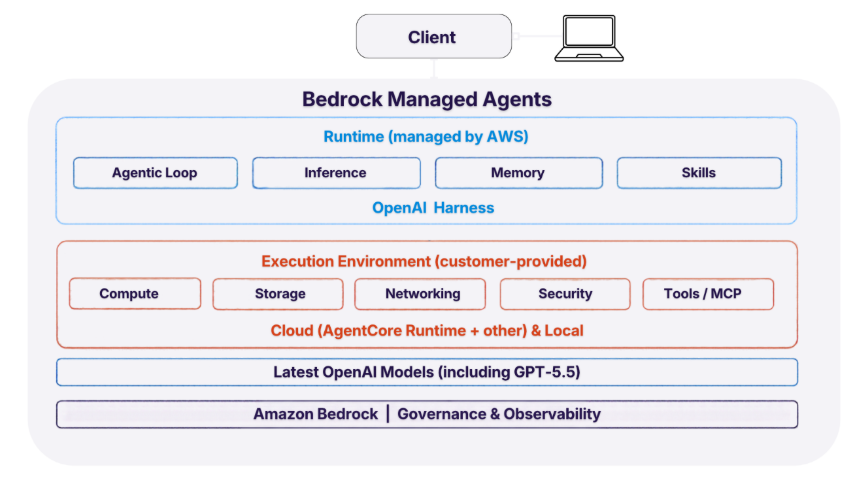
Figure 1: Bedrock Managed Agents Architecture (source)
Core Components of AWS Bedrock Managed Agents Architecture
To understand how Amazon Bedrock Managed Agents operate, it helps to look at the six core building blocks that manage state, compute, and permissions across every interaction.
- Session: Acting as your primary unit of configuration and isolation, each session defines a specific model, instructions, tools, an IAM role, and an execution environment.
- Turn: The work performed in response to a submitted message. A turn can include reasoning, tool calls, and generated output.
- Execution environment: The customer-provided compute layer, either your own host or Amazon Bedrock AgentCore Runtime, where commands and local tools are executed.
- Exec server: The codex exec-server process responsible for bridging the execution environment to BMA via an outbound connection to the service.
- Items and events: Items contain durable conversation output, whereas the event stream broadcasts real-time progress.
- Session role: An IAM role assumed by BMA to perform authorized operations on your behalf, such as model inference and, if configured, AgentCore Runtime activation.
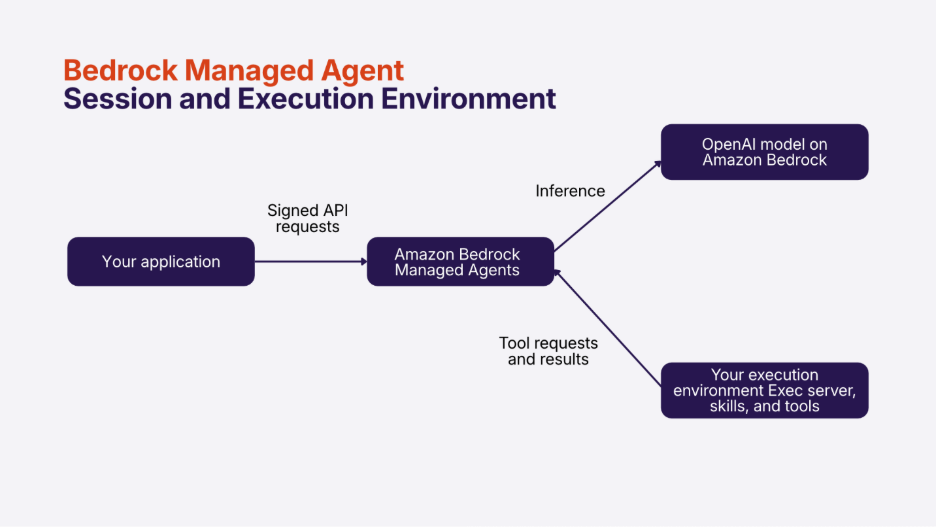
Figure 2: BMA Session and Execution Environment
Key Advantages of Running Bedrock Managed Agents on AWS
Pairing OpenAI’s reasoning capabilities with managed AWS infrastructure brings three primary benefits to teams moving agents into production.
- Context-aware multi-step reasoning: By pairing OpenAI models with the Codex harness, BMA preserves context, coordinates tools and specialized agents, and steers complex multi-step assignments. Keep in mind that subagents are not supported during the preview, so you should structure multi-agent designs accordingly.
- Built-in AWS identity and defined permissions: Every agent runs with a dedicated AWS identity and scoped permissions that govern its resource access and allowed actions, keeping both the agent runtime and model inference contained within AWS.
- Native colocation with AWS data and compute: Running directly on AWS infrastructure keeps BMA integrated with the compute, data services, and applications your teams already use. However, the availability during the preview is restricted to three US Regions.
Best Use Cases for AWS Bedrock Managed Agents
BMA fits teams already standardized on OpenAI’s Agents API and Codex workflows. It is ideal when you need the agent loop and OpenAI inference to stay inside AWS while running tools on hosts you control. A typical example is a code-investigation agent whose exec server runs on a build host inside a VPC with read access to private repositories.
What Is the Amazon Bedrock AgentCore Harness?
The Amazon Bedrock AgentCore Harness is a generally available, AWS-managed runtime that handles the orchestration loop for you. Instead of manually coding execution logic, you declare the model, tools, skills, and instructions in configuration. AgentCore then works with any supported model provider to provision an isolated microVM session complete with a filesystem, shell, memory, web browsing, identity, and observability.
Think of the model as the brain and the AgentCore Harness as the body. It manages tool execution, context window limits, cross-turn state persistence, failure recovery, and session isolation. Since the exact configuration you use for prototyping runs at scale, you can transition to production seamlessly. You can also export it to code whenever custom orchestration is required. For a deeper walkthrough, see AgentCore Harness for Production in AI Agents.
How the AgentCore Architecture Works
Rather than locking you into a single model or forcing you to manage sessions on AWS infrastructure, the AgentCore Harness separates configuration from execution through four core mechanisms.
- Declarative setup and session provisioning: You define the model, tools, skills (including the AWS-curated catalog), and instructions. For every session, AgentCore automatically provisions an isolated microVM alongside a filesystem, shell, web browsing, memory, identity, and observability.
- Dynamic model routing across four provider paths: You assign a default model on CreateHarness and can override it during any InvokeHarness call across four distinct provider paths:
– bedrock: Supports Anthropic Claude, Amazon Nova, Meta Llama, DeepSeek, Qwen, Kimi, MiniMax, Cohere, and Mistral, in addition to OpenAI GPT-5.5 and GPT-5.4 on Amazon Bedrock.
– openAi: Provides direct access to api.openai.com.
– gemini: Connects to Google Gemini.
– liteLlm: Connects to Anthropic direct, Azure OpenAI, Vertex AI, Cohere, Mistral, and other LiteLLM-compatible providers.
- Stateful cross-provider handoffs: Conversation state remains intact even when you switch model providers mid-session. This allows you to plan using Claude Opus, generate code with GPT-5.5, and summarize results with Gemini within the same thread.
- Transitioning to custom code: You can launch with pure configuration on day one and scale to thousands of users on that exact foundation. Whenever custom logic is required, a single CLI command exports your harness into Strands-based code, with Claude Agent SDK export noted as coming soon.
Key Benefits of the AgentCore Harness for Production AI Agents
Choosing the AgentCore Harness gives engineering teams three core operational benefits when scaling agents into production:
- Multi-model flexibility without vendor lock-in: You can avoid single-vendor lock-in by switching models on any call or mid-session.
- Pre-configured isolated sandboxes: Every session runs in its own isolated environment equipped out of the box with a built-in filesystem, shell access, cross-session memory, and web browsing.
- End-to-end platform governance: Agents connect to AgentCore Gateway for per-tool authorization, with Identity, Memory, and Observability.
Ideal Use Case for AgentCore Harness
This path is best suited for engineering teams building production-grade agents on AWS. It fits teams that need multi-model routing freedom and out-of-the-box isolated sandbox and shell execution. It is also ideal when you want a seamless upgrade path from declarative configuration to Strands code. For deployment patterns beyond the harness, see Deploying Agents with Amazon Bedrock AgentCore.
Bedrock Managed Agents vs AgentCore Harness: Head-to-Head Comparison
While both services eliminate custom orchestration code, they take fundamentally different approaches to model support and execution control. Bedrock Managed Agents is an OpenAI-focused preview service that executes tools on compute you manage. In contrast, the AgentCore Harness is a generally available, model-agnostic service that runs tools inside an AWS-managed microVM.
The table below compares both options across the key architectural dimensions you will evaluate during a system design review.
| Dimension | Bedrock Managed Agents (OpenAI) | AgentCore Harness |
| Core harness / engine | OpenAI’s Codex harness operated on AWS, adapting OpenAI’s Agents API | AWS-managed harness that exports to the Strands-based code |
| Supported models | OpenAI models | Model-agnostic: Amazon Bedrock, OpenAI, Gemini, or any LiteLLM-compatible provider, with mid-session switching |
| Maturity and availability | Public preview since September 29, 2026, in US East (N. Virginia), US East (Ohio), and US West (Oregon) | Generally available since June 2026, in all Regions where AgentCore is generally available |
| Execution and state | AWS manages the conversation and model calls, tools run on compute you provide | Declarative configuration with microVM sessions, filesystem and shell, and persistent memory and files |
| Tool execution | Self-hosted compute or AgentCore Runtime; the exec server connects outbound to the service | Isolated microVM session with a filesystem and shell |
| Governance and tooling | Each agent has its own IAM role. AWS CloudTrail records supported API activity | AgentCore Identity, Gateway (MCP), Memory, Observability, and environment-level skills |
| Pricing model | No additional charge during preview, pay for model inference and underlying compute and resources | No separate harness charge; pay for AgentCore resource usage (Runtime compute, Memory, Gateway) plus tokens |
| Limits | Text-only input, no subagents, no built-in long-term memory, no cross-Region inference, no customer-managed KMS key for session data | Generally available, cross-session memory and web browsing included |
Table 1: Bedrock Managed Agents vs AgentCore Harness
Neither option adds a surcharge for the orchestration layer itself, meaning your total spend tracks model tokens alongside the underlying compute your tools consume. However, AWS does note that a deployed stack can keep incurring charges when no turn is running. In contrast, the AgentCore Harness has no additional harness fee. Instead, the AgentCore Runtime bills the CPU and memory a session consumes per second. The Memory and Gateway are billed by usage.
What the Preview Limits Mean in Practice
Before you commit a regulated workload to Bedrock Managed Agents, take a look at the limits row. AWS offers the preview in three US Regions and lists these limits on its preview limitations page.
- No customer-managed KMS key: You can’t control the key that encrypts session data, which is a common blocker in security reviews for regulated industries.
- No cross-Region inference: Throughput is bounded by in-Region capacity in the three preview Regions, so plan for throttling and request quota increases early.
- No built-in long-term memory: Anything that must outlive a session, such as user preferences or prior findings, has to be persisted by your own code, for example in Amazon DynamoDB or Amazon S3.
- Text-only input and no subagents: Workflows that ingest images or fan work out to specialized subagents need a different design until these limits lift.
Architectural Trade-Offs: Which Should You Pick?
Both services handle the orchestration loop for you, so the real choice comes down to control versus flexibility. You can choose Bedrock Managed Agents to run OpenAI agents on compute you manage. However, if you want to switch across multiple models inside AWS-managed sandboxes, AgentCore Harness is a better option.
When to Choose Bedrock Managed Agents
Select this option if your architecture prioritizes OpenAI-native workflows and direct control over host execution:
- Deep alignment with OpenAI’s Agents API: You want OpenAI models paired with an OpenAI-engineered harness running directly inside AWS.
- Execution on self-managed infrastructure: You need the Codex exec-server running on existing hosts with direct access to private systems, rather than executing solely inside a managed sandbox.
- Compatibility with current preview boundaries: Text-only input meets your needs, you do not require a customer-managed KMS key for session data, and your home Region is one of the supported preview Regions.
When to Choose the AgentCore Harness
Select this option if your team needs multi-model flexibility, managed sandboxes, and immediate general availability:
- Dynamic cross-provider routing: You need to route different turns across Claude, GPT, Gemini, or Nova mid-session without losing conversation state.
- Turnkey sandboxed infrastructure: An isolated filesystem, shell, web browsing, memory, identity, and observability are all defined purely through configuration.
- Built-in graduation to custom code: You can export your managed configuration into editable Strands code as your orchestration complexity grows.
- Immediate production readiness: Your workload requires a generally available service today and cannot wait for preview limits or regional restrictions to lift.
To get started, request a private offer for the Amazon Bedrock AgentCore Activator by Cloudelligent. This 3-week engagement deploys a configured AgentCore runtime into your AWS account.
Can You Use Bedrock Managed Agents and AgentCore Harness Together?
You do not have to treat these two services as an all-or-nothing choice. Bedrock Managed Agents can run on AgentCore Runtime as its execution environment while tapping directly into AgentCore governance, observability, and gateway capabilities.
This interoperability means your team can build a single foundation for identity, per-tool authorization, and monitoring patterns. From there, you can run OpenAI-native workloads on Bedrock Managed Agents alongside multi-model agents on the AgentCore Harness. This can keep both architectures unified under one shared set of operational controls.
Move From Architectural Choice to Production with Cloudelligent
Bedrock Managed Agents keeps OpenAI’s harness and model inference inside AWS. Conversely, the AgentCore Harness offers model-agnostic flexibility and an isolated environment for each agent.
Regardless of which runtime you select, building the initial demo is rarely the hardest part. Real production readiness comes down to tightening IAM boundaries, enforcing granular tool authorization, and establishing deep observability so your agents can run unattended. As an AWS Premier Tier Services Partner, Cloudelligent helps you select the right architecture, configure secure IAM and AgentCore policies, and transition prototypes into production.
Ready to pressure-test your agentic architecture? Book a Free Agentic AI Assessment with Cloudelligent’s AWS-certified architects.
Frequently Asked Questions
Amazon Bedrock Managed Agents, powered by OpenAI is an AWS public preview service that adapts OpenAI’s Agents API and Codex harness to run natively inside your AWS account. It manages stateful orchestration and OpenAI model inference on Amazon Bedrock using IAM (SigV4) via bedrock-mantle endpoints.
Neither service charges a standalone harness or agent fee. Instead, you pay solely for underlying AWS consumption and model inference. For AgentCore Harness, you are billed per second for active CPU/memory compute, model tokens, and optional tools like Memory or Web Search. For Bedrock Managed Agents, there is no extra fee during preview, meaning you only pay for OpenAI model inference, execution compute, and supporting AWS storage or networking.
You configure a default model on CreateHarness and override it on any InvokeHarness call across four supported provider paths: bedrock, openAi, gemini, and liteLlm. AgentCore Memory preserves conversation state automatically across turns.
Currently, Bedrock Managed Agents is available in three Regions via regional bedrock-mantle endpoints. It currently supports text-only inputs and does not support cross-Region inference profiles, customer-managed KMS keys for session data, subagents, or built-in long-term memory.
Yes. When a managed AgentCore Harness configuration outgrows declarative settings, you can run agentcore export harness to generate an editable Python source project using the Strands framework.
They work together instead of competing: you can run Bedrock Managed Agents on AgentCore Runtime for isolated sessions while sharing AgentCore Gateway, Identity, and Observability across both OpenAI-native and multi-model agents. Cloudelligent can help set up these shared controls starting with a free Agentic AI Assessment.